

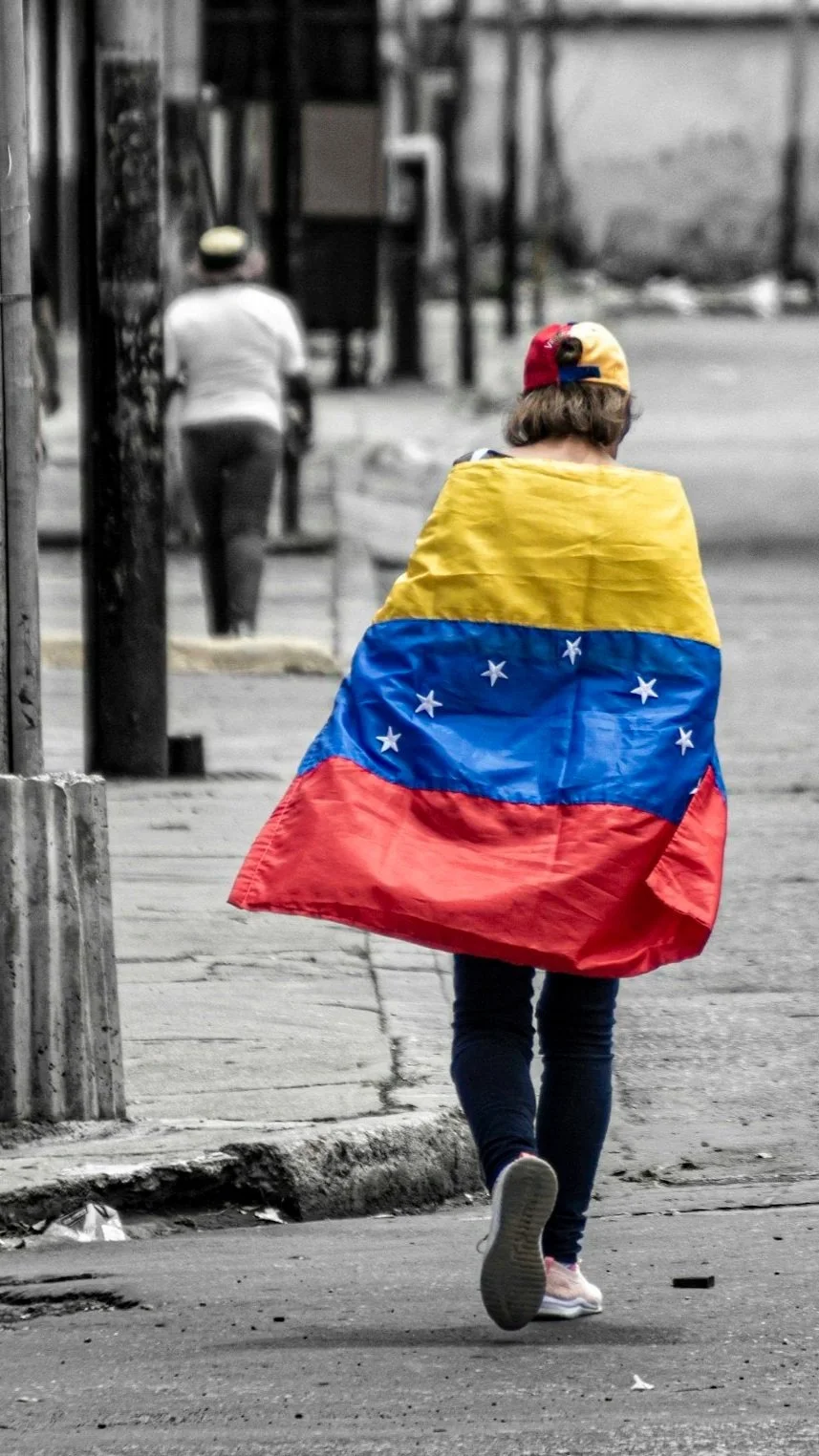
Venezuela is entering another period of heightened instability, and history shows that moments like this carry real consequences for civilians far beyond politics or borders. Years of economic collapse, institutional breakdown, and mass displacement have already forced millions of Venezuelans to migrate across South America, Central America, and the Caribbean. When instability intensifies—whether through internal conflict, economic pressure, or regional military tension—the first people affected are not political leaders, but families, workers, and children.
This matters because displacement and desperation (physical, mental, and spiritual) are the primary conditions traffickers exploit. According to Mission 991’s experience in the field as well as the United Nations High Commissioner for Refugees (UNHCR) and the International Organization for Migration (IOM), Venezuelans now represent one of the largest displaced populations in the world, many moving through irregular routes with little protection.
Trafficking rarely begins with violence. It begins with vulnerability, misinformation, and lack of alternatives. As borders tighten and legal options disappear, traffickers move faster than governments can respond. This is why organizations like Mission 991 are vital to cut through the red tape until the more capable but slower justice system gets its weight behind rapidly changing conditions. Any escalation in Venezuela must be understood not only as a security concern, but as a human trafficking risk with predictable downstream effects across the region.
Sex Trafficking Risks for Women and Girls

Periods of instability consistently lead to increases in sex trafficking, and Venezuelan women and girls have already been heavily impacted. Traffickers target the same migration routes used by families seeking safety. Women traveling alone or with children are often approached with false job offers in hospitality, domestic work, or informal service jobs. These are some of the most common, but far from the only forms of deception and abuse. Often it comes from familial sources such as parents, aunts, uncles or other positions of authority to the minor. Once across a border, those offers turn into coercion and control.
Data from IOM and UNODC shows that Venezuelan women are most often trafficked into nearby countries first, including Colombia, Peru, Ecuador, Brazil, and parts of the Caribbean. Tourism centers, border towns, port cities, and mining regions appear repeatedly in case reporting.
Control methods are usually subtle. Debt, confiscated documents, threats of deportation, and isolation replace physical force. When instability increases, reporting drops. Survivors fear detention or removal more than abuse. That silence allows exploitation to expand with little resistance.
Labor Trafficking and Forced Exploitation of Men
Labor trafficking follows the same displacement patterns, but receives far less attention. Venezuelan men and adolescent boys are frequently exploited once legal work becomes inaccessible. As instability grows, many accept dangerous or informal labor simply to survive or support family members.
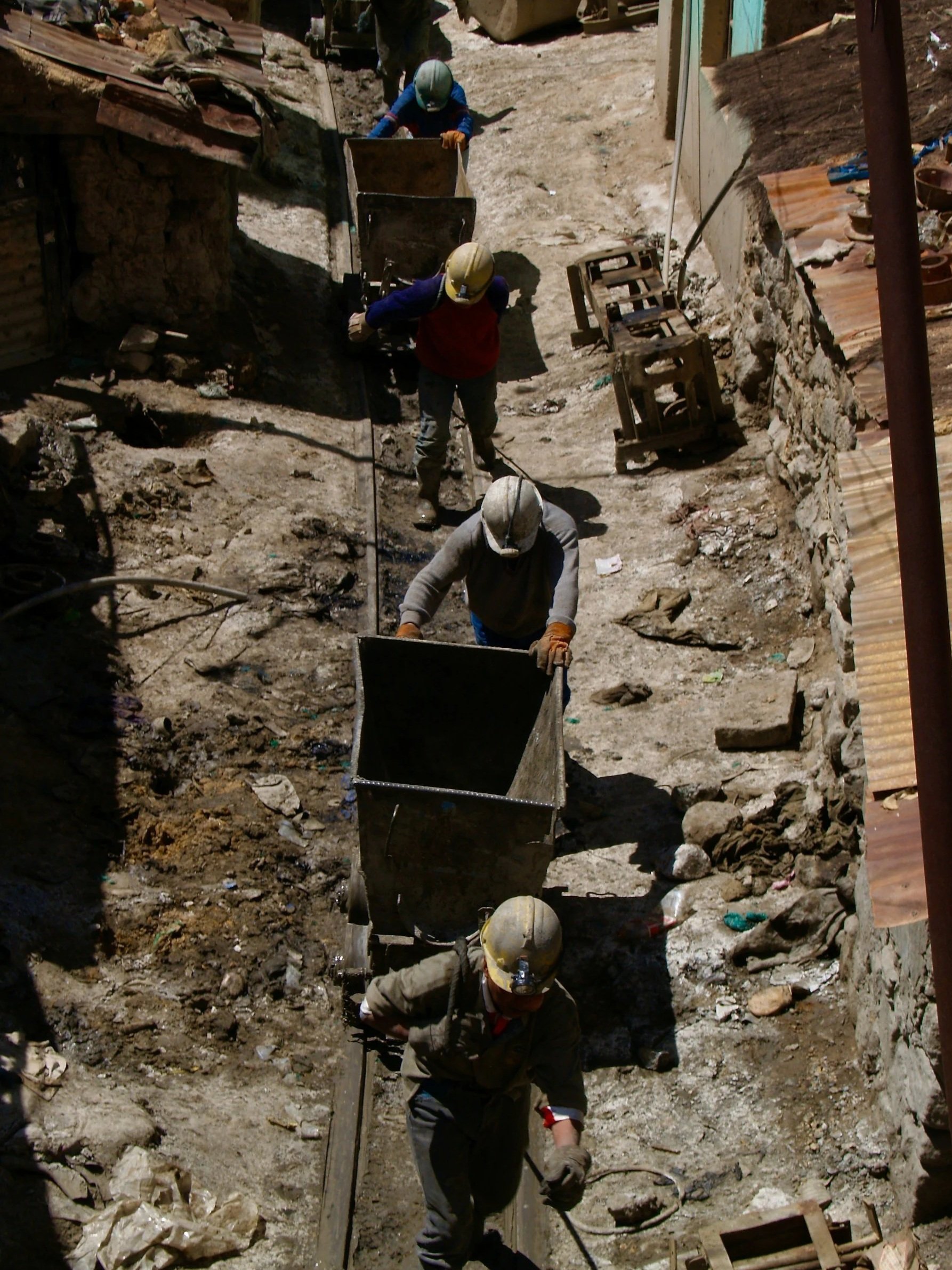
Reporting from the International Labour Organization (ILO) and regional authorities shows consistent exploitation in construction, agriculture, fishing, logging, transportation, and mining—both legal and illegal. Colombia, Peru, Brazil, Ecuador, Chile, Guyana, and parts of Central America appear most often as destinations.
Control methods are predictable: smuggling debt, withheld wages, confiscated identification, threats of violence, and threats of immigration reporting. In remote mining and agricultural zones, isolation makes escape difficult. Many victims do not identify as trafficked because the exploitation is framed as work. This underreporting allows forced labor to continue largely unseen.
As conditions in Venezuela worsen, labor exploitation across the region will increase in both scale and severity. This is also where Mission 991 has seen some of the best intentioned work by other agencies with devastating results. We have to be prepared to step into a situation with long term solutions. If physical and sexual abuse is taking place the urgency to intervene takes priority. But if it is a lack of fair pay, safety conditions, etc then we must take a slower approach to correct the situation rather than displace workers with no better option.
Why Instability Accelerates All Forms of Trafficking
Sex trafficking and labor trafficking expand for the same reasons. Instability compresses timelines. When borders tighten, legal migration slows, and economies fracture, people move faster and take greater risks. Criminal groups adapt quickly, presenting themselves as transporters, employers, aid organizations, religious organizations or helpers.
During periods of military or political tension, enforcement resources shift toward security priorities. Labor inspections, victim identification, and cross-border coordination often suffer as a result. According to UNODC, trafficking networks are most effective during crisis-driven displacement, when confusion is high and oversight is low.
The concern now is not whether trafficking will increase, but how quickly and at what scale. Past Venezuelan displacement waves show a clear pattern: spikes in migration are followed by spikes in exploitation.
Why Organizations Like Mission 991 Exist
Moments like this are exactly why Mission 991 exists. Our work is not tied to political outcomes, border narratives, or media click bate. It is focused on identifying exploitation as it unfolds, sharing actionable intelligence with trusted partners, and helping disrupt trafficking networks before harm escalates. While we cannot guarantee action and outcome we can control our response and we must all do what we can.
During periods of instability, survivors are less likely to come forward and reliable information becomes harder to verify. Trafficking networks rely on silence, fragmentation, and delayed response. Independent organizations can move faster by analyzing patterns, flagging emerging threats, and supporting partners responding to real cases in real time.
Why Public Awareness and Intelligence Matter
Trafficking networks operate through everyday systems: transportation, housing, employment, and online recruitment. As displacement grows, so does exploitable activity. Law enforcement and humanitarian organizations cannot see everything. Public reporting often provides the first indicators.
According to UNODC and IOM, many trafficking cases begin with community observations rather than formal inspections. Intelligence does not require certainty. It requires attention. Small details, shared responsibly, often reveal larger patterns.
Counter-trafficking work requires sustained capacity. Intelligence analysis, secure reporting systems, partner coordination, and data verification all require resources. During instability, costs increase. Under-resourced efforts are forced into a reactive posture. Well-resourced efforts can intervene earlier and reduce harm.
This is about maintaining the minimum capability needed to operate responsibly in high-risk environments.
What You Can Do
Trafficking thrives in silence. It weakens when communities stay informed and engaged.
If you observe:
Restricted movement tied to work or housing
Recruitment that relies on urgency or secrecy
Wages withheld through “fees” or debt
Overcrowded housing connected to employment
Document what you see and report it safely. You do not need proof. Patterns matter more than certainty.
How to Report Concerns and Learn More
United States & International Reporting
U.S. National Human Trafficking Hotline
Operated by Polaris and supported by the U.S. Department of Health and Human Services.
• Phone (24/7): 1-888-373-7888
• Text: “HELP” or “INFO” to 233733 (BeFree)
• Online reporting: https://humantraffickinghotline.org
• Available in 200+ languages
• Reports may be anonymous
Homeland Security Investigations (HSI) Tip Line
For trafficking, smuggling, forced labor, and transnational criminal activity.
• Online tips: https://www.ice.gov/tipline
• Phone: 1-866-347-2423
• International callers: 1-802-872-6199
FBI Tips and Public Assistance
For trafficking involving organized crime, fraud, coercion, or cross-border activity.
• Online tips: https://tips.fbi.gov
• Emergencies: 911 (U.S.)
International & Regional Resources
INTERPOL – Human Trafficking Awareness
Provides information on international trafficking patterns and law enforcement coordination.
• https://www.interpol.int/Crimes/Human-trafficking
UN Office on Drugs and Crime (UNODC)
Global data, research, and prevention resources on trafficking and exploitation.
• https://www.unodc.org/unodc/en/human-trafficking
International Labour Organization (ILO)
Resources on forced labor, labor trafficking, and migrant worker exploitation.
• https://www.ilo.org/global/topics/forced-labour
Reporting to Mission 991
Mission 991 accepts non-emergency intelligence and situational reports related to human trafficking, exploitation patterns, missing persons, and transnational criminal activity. All submissions are reviewed carefully and handled discreetly.
• Secure reporting: https://mission991.org
• General contact: info@mission991.org
• Information may be submitted without political affiliation or advocacy intent
• Mission 991 does not engage in partisan activity
Important Reporting Guidance
• If someone is in immediate danger, contact local emergency services first.
• Do not attempt to intervene directly with suspected traffickers.
• Share observable facts, not assumptions.
• Photos, dates, locations, online usernames, and travel patterns can be helpful.
• Your report may provide a missing piece that connects ongoing investigations.
Why Reporting Matters
Trafficking networks rely on silence, fragmentation, and fear. Responsible reporting helps law enforcement and NGOs identify patterns earlier, disrupt exploitation, and protect those most at risk—especially in regions experiencing economic collapse, displacement, and political instability.
Mission 991 exists to serve people, not politics. Awareness, intelligence, and sustained support are essential to preventing exploitation before it escalates.
Staying Focused on the Mission
As the situation in Venezuela continues to evolve, Mission 991 will remain focused on one objective: protecting vulnerable people from exploitation, regardless of borders, headlines, or politics. Trafficking thrives when attention drifts. Our work exists to ensure it does not.
Sources:
https://www.unhcr.org/venezuela-emergency.html
https://dtm.iom.int/venezuela
https://www.iom.int/venezuela
https://www.unodc.org/unodc/en/data-and-analysis/glotip.html https://www.ilo.org/global/topics/forced-labour
https://www.unodc.org/unodc/en/human-trafficking/crisis.html
https://www.unodc.org/unodc/en/human-trafficking/civil-society.html https://www.unodc.org/unodc/en/human-trafficking/identification.html
